You may call me crazy, but as much as I like the city, the only reason for me to move and live in NYC is the Metropolitan Museum of Art; I swear I would spend there every single weekend of my life.
George Lois contended that the DNA of talent is stored within the great museums of the world. I couldn’t agree more, museums are custodians of epiphanies and these epiphanies enter the central nervous system and deep recesses of the mind. The history of the art of mankind can inspire breakthrough conceptual thinking, in any field. One example suffices to prove my point: look at what the Met had in storage for us lunatics during a few months.
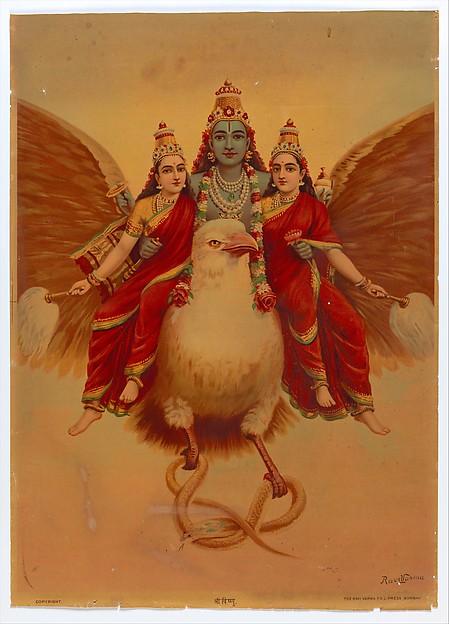
Vishnu is accompanied by his wives Sri Devi and Bhu Devi, who ride his celestial mount, the mythical man-bird Garuda, here depicted in full avian form. Vishnu is portrayed as “The Blue Lord,” richly garlanded in pearls and flowers, while his wives hold yak-hair fly whisks to fan their lord. All wear gold and jewel-encrusted crowns. Garuda has in his talons a cobra, the eagle’s mortal enemy, here symbolizing victory over nature spirits. This is a superb example of a chromolithographic Hindu devotional print designed by the famed artist Ravi Varma (1848–1906) and printed at his Fine Art Lithographic Press in Mumbai.
This print was part of the exhibition “Encountering Vishnu: The Lion Avatar in Indian Temple Drama”, in which Vishnu’s Narasimha (man-lion) appearance was celebrated with several dramatic sculptural depictions. They all explored the theme of Vishnu in his man-lion form, revealing himself at the court of an evil king in response to the king’s attempts to slay his own son for his unwavering devotion (bhakti) to Vishnu. This narrative was dramatically represented in painting as well, and when staged it was given heightened drama by the wearing of five powerfully expressive wooden masks recently acquired by the Met. This temple drama, known as Hiranyanatakam, is still performed in the Kaveri delta region of Tamil Nadu, in villages around Thanjavur in southern India.
http://www.metmuseum.org/exhibitions/listings/2015/encountering-vishnu
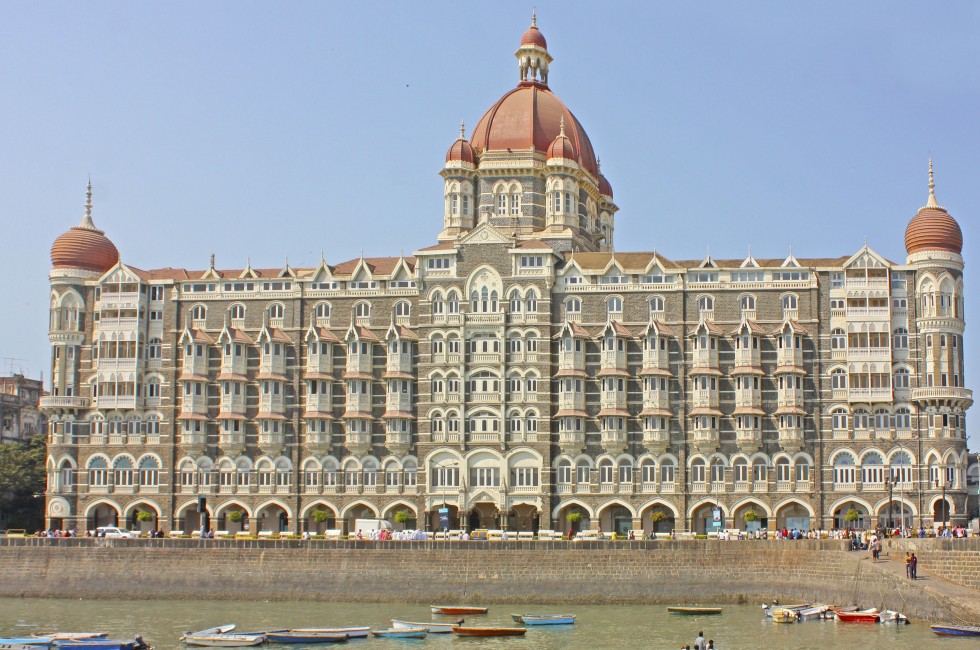 I came there alone hoping to catch the last boat back to Alibagh; people quickly surrounded me, a kind swarm watching at me intrigued as if I was carrying a golden secret. And maybe I was; I didn’t know it at that time, but I was holding a seed deep inside of me, as if I was pregnant. My heart beating uncontrollably after the long run, his voice ringing “We’ll meet again” –You wish, what an arrogance!- I said to myself. I turned my head just to be sure nobody had followed me, and then I saw it for the very first time, and by that I mean I apprehended it. This great architectural body, the Taj Mahal Palace rising up reflecting the sun and establishing a visual dialog with the Gateway of India. Splendid.
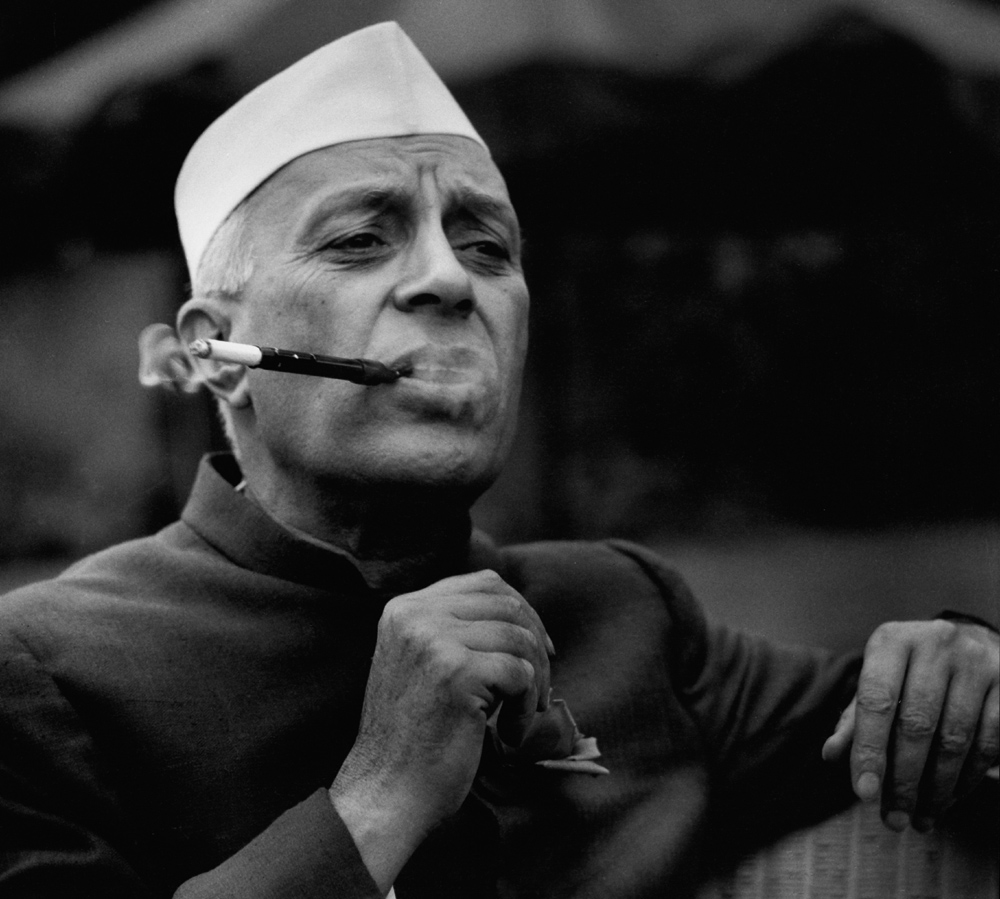 This simple white cap, a bit like an upturned boat was made popular by Gandhi during the South African Indian passive resistance struggle of 1907 to 1914. Gandhi and other jailed Indian protestors were obliged to follow the dress code of black prisoners, which included the cap that Gandhi was to make his own. When Gandhi returned to India, he adopted the custom of wearing clothes made with homespun “khadi” cotton. Along with the use of Swadeshi goods (as opposed to those manufactured in Europe), the attire represented his message of cultural pride, self-reliance and solidarity with India’s rural masses and a symbol of non-cooperation against the British Raj.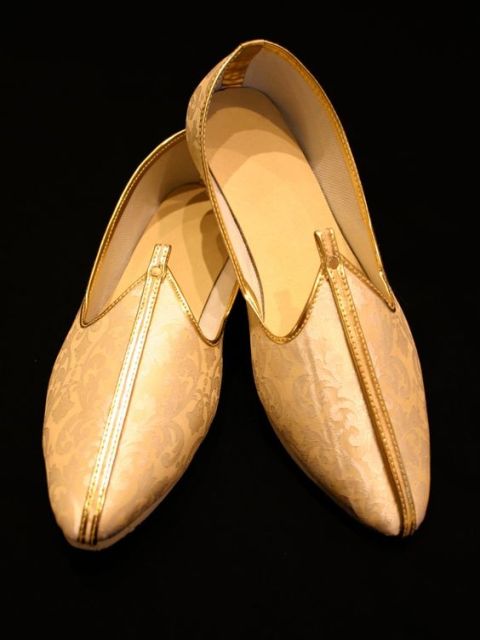


 nohemidragonne.net